Sunday, December 14, 2025

A Prayer for Owen MeanyA Prayer for Owen Meany by John Irving
My rating: 4 of 5 stars

A Prayer for Owen Meany is the third novel by John Irving that I have read, after The Hotel New Hampshire and The World According to Garp, which I had read many years ago, before I joined Goodreads. Despite a very busy time at work, I stayed late at night reading Owen. I like the novel the most of the three.

To me, the central question that the author poses is whether everything in life is predestined or random; in other words, free will versus determinism. While Owen does not believe in coincidences, I—a mathematician, who often teaches probability theory—tend to be on the other side of the argument and embrace the concept of randomness as a powerful force affecting events.

The story is captivating, the reader gets a surprise ending, and—despite the rather serious tone of the novel—there are several hilarious passages, like the one about events at the Christmas Pageant. And let's not forget the armadillo... All this makes A Prayer for Owen Meany an excellent read. I don't particularly like the capitalization device that the author uses to distinguish Owen's voice, but I got accustomed to it after a while.

And one more thing... Owen Meany's initials happen to be the same as Oskar Matzerath's, the narrator of The Tin Drum. Some other similarities are obvious too. This time, I do not believe in coincidence. One more benefit of having read A Prayer is that I now have strong motivation to reread Günther Grass' masterpiece.


View all my reviews
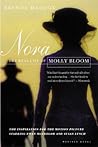
Nora: The Real Life of Molly BloomNora: The Real Life of Molly Bloom by Brenda Maddox
My rating: 4 of 5 stars

Brenda Maddox' Nora: The Real Life of Molly Bloom, a biography of Nora Barnacle, James Joyce's wife, is one of the best biographies I have ever read. For once, I have to agree with the blurb on the cover, which says, "A brilliant biography that radically alters our understanding... The first book to read about James Joyce himself."

To me, the most important message of the book is how much James Joyce owes to his wife, and after reading the biography, one will most likely question whether all the greatness of Joyce's work would be possible without Nora.

Ms. Maddox writes, "Nora is important because she belonged to Joyce and because she never did. She was the stronger of the two, an independent spirit who had far more influence on him than he upon her." She then quotes Arthur Power: "[...] I do not believe James Joyce could have coped with the difficulties of daily life had it not been for the great devotion and courage of his wife Nora. Theirs was a constant companionship based on love and congenial understanding. [...] no important move would be made one without the other. Unless one had seen them together one would not realize how much James Joyce depended on his wife Nora."

I love the quote from Elizabeth Curran, the daughter of Joyce's Dublin friend: "She could laugh him out of his depression by her plain, down-to-earth humor. [...] He never shut her up, not for a minute. [...] people could see their closeness. He would start a conversation with Nora, intentionally shutting all the others out. They had a kind of running banter between them on a very intimate level. She was a relief and an outlet for him. It made a wonderful impression -- this utter understanding between two people."

The fragments of the biography that discuss Nora's influence on Ulysses and Finnegans Wake are fascinating even for this reviewer, who is completely inexpert in literary analysis. The biography is extremely well researched and thoroughly annotated (91 pages of Appendix). It is not an easy recreational read because of the serious themes, high level and depth of literary analysis, and the stunning amount of detail in chronicling Nora and Joyce's life. I am promising myself to reread Ms. Maddox' work when I have more time in summer.

View all my reviews
The White TigerThe White Tiger by Aravind Adiga
My rating: 3 of 5 stars

For two months since I finished reading The White Tiger, I have been trying to understand why I am unable to agree with the accolades heaped on Aravind Adiga's novel, which even won the prestigious Booker Prize in 2008. I used to almost always strongly agree with Booker verdicts: Coetzee's Disgrace, Ishiguro's The Remains of the Day, Banville's The Sea are some of the very best books I have read in my life, and Barnes' The Sense of an Ending is close to that distinction. And yet, I don't see the greatness in The White Tiger, and my rating barely reaches three stars.

The novel paints an extremely bleak and depressing portrait of rural India, a place where corruption is the basic way of life and which is governed by the caste system. A person born in a low caste has no way upward in the social hierarchy; the caste fully determines the future of a person. Nothing can be done about it, unless someone is ready to commit a major crime. The protagonist of the novel, one Balram Halwai, born into the poor family of a rickshaw puller, chooses that drastic option and, consequently, becomes a successful entrepreneur, establishing his own company.

I understand that The White Tiger may be viewed as a sort of satirical novel, where the author aims at employing very dark humor to make his point about rural India's problems. Alas, to me, the humor is awkward and painful rather than dark, and the writing is thoroughly unremarkable. So—while I commend the author for trying to address the momentous social issues—it pains me that I am blind to the excellence of the novel noticed by the Booker Prize jury, an institution that I greatly respect.

View all my reviews
FiascoFiasco by Stanisław Lem
My rating: 3 of 5 stars

Fiasco (1986), like Lem's most famous novel, Solaris (1961), is part adventure science fiction novel and part philosophical discourse. In my view, Solaris combines these two genres more successfully.

The plot is set in the distant future, when technology has advanced to such a degree that, for example, spaceships are able to use black holes to manipulate time so interstellar space travel does not take thousands of years, gravitation can be harnessed, power generation is a thousandfold more efficient than nuclear fission, and friendly AI reliably controls every aspect of any human endeavor.

A spaceship launched from our solar system travels to Quinta, the fifth planet of the sixth sun in the constellation Harpy, where signs of intelligent life might have been detected. The task of the human crew, assisted by nearly omniscient AI, is to establish contact with that civilization.

The novel poses several fascinating and difficult questions concerning SETI (search for extraterrestrial intelligence) as well as attempts to contact that civilization and communicate with it (CETI). The central question is whether meaningful contact with an extraterrestrial civilization is possible at all. Several other deeper issues are touched, for instance, a sort of general theory of civilization development, the blinding role of anthropocentrism in selecting avenues of contact, and even a religious take on SETI.

While I greatly appreciate the serious themes of the novel, I do not believe that the development of the plot and, particularly, the characterizations are up to par. To me, the personas and actions of the crew members sound artificial and a bit cartoonish. I believe it is the first time ever that I criticize Lem, but my complaints concern the "action layer" of the novel only. The underlying philosophy and the message that the book conveys are first-class, as they always are in Lem's novels and stories.

One of my personal takes on the main point of Lem's novel is that we humans need to practice more humility when attempting CETI. After all, it is quite possible that Frank Zappa's quip about the basic building block of the universe (which is stupidity) applies only to our solar system.

View all my reviews