Tuesday, March 17, 2015

Cécile is DeadCécile is Dead by Georges Simenon
My rating: 4 of 5 stars

"The rain was soft, cheerless and hopeless, like a widow's tears." A neat sentence from a good book. "Maigret and the Spinster" (also known as Cécile is Dead") is indeed a pretty good crime novel, and now I understand why I considered Georges Simenon a first-class writer, when reading his works for the first time, about 40 - 50 years ago. This 1942 book works well not only as a mystery, but it also conveys the hopelessness of life of poor, meek, and unlucky people, people who have to work days and nights to put cheapest food on their tables, honest people, who just have neither the drive nor the luck to succeed in life. This is a very sad novel. Extremely sad.

When Chief Superintendent Maigret comes to his office, Cécile, an unattractive spinster, is waiting for him again - she has been frequently coming to complain about strange events, like furniture being moved at night, that happen in the apartment she shares with her aunt. Maigret does not quite believe her and his colleagues make fun of the situation, implying Cécile's romantic attachment to him. But when she suddenly disappears from the waiting room, Maigret becomes concerned. He discovers that the aunt has been strangled, and soon he learns that Cécile has been killed as well.

Cécile is one of the saddest characters I know in the crime literature. A decent and caring person, she has been cheated out of even one ounce of happiness in her lonely life. She has never gotten a lucky break, while always being ready to serve others, and patiently waiting for help from people who are either too busy, too cruel, or too caring about their own sake to help her. Truly, "some are born to endless night," while so many scoundrels "are born to sweet delight." It is because of Cécile's character that my rating is so very high (the novel itself would just merit three and perhaps a quarter stars.)

Four stars.


View all my reviews

Sunday, March 15, 2015

Maigret's War Of NervesMaigret's War Of Nerves by Georges Simenon
My rating: 2 of 5 stars

Yet another coincidence. After finishing Agatha Christie's 1931 novel "Murder at Hazelmoor", I picked up the next "light reading item" on my shelf, and it happened to be Georges Simenon's "Maigret's War of Nerves" (French title is "La Tête d'un homme"), written in the same year. In both the Christie's and Simenon's novels the plots take place in about 1930 and I find it interesting that Christie's past seems to be much more dated than Simenon's. It feels almost like my grandmother's world versus my own. It cannot be just because Dame Agatha was 13 years older than the Belgian author. I would rather think that the rigid class structure of the particular segment of British society portrayed in "Murder" resembles a typical Victorian setting, whereas Simenon's story happens mainly in Parisian cafes, where one is as likely to meet American businessmen as destitute people, which I believe is still the case today.

A death-row prisoner, convicted for murdering a rich American woman and her maid, escapes from the Santé Prison in Paris, apparently with Maigret's and other officials' consent. Maigret's people follow the escapee, yet when he soon manages to shake the tail, the good Inspector is not too concerned. He meets a mysterious Czech émigré, Radek, who implies he knows more about the events. Maigret seems to be waiting for something to happen - he is waging his "war of nerves".

I find Mr. Simenon's writing much stronger than Ms. Christie's, even with his frequent use of hysterical prose (e.g., "Once more those eyes were glittering with the keenest intelligence as they looked at him with superb derision. It was as though his whole being was in an ecstasy of triumph.") At least the main characters feel almost like real people, even if the characterizations are a little over the top.

Two and a quarter stars.


View all my reviews

Thursday, March 12, 2015

Puerto Rico: The Trials of the Oldest Colony in the WorldPuerto Rico: The Trials of the Oldest Colony in the World by José Trias Monge
My rating: 4 of 5 stars

José Trías Monge was Puerto Rico's Attorney General in the 1950s and the Chief Justice from mid-1970s to mid-1980s. His book "Puerto Rico: The Trials of the Oldest Colony in the World" is a serious, eye-opening work on how the colonial powers (first Spain, then the United States) have been preventing this Caribbean nation from achieving true freedom and self-determination. Officially, the Commonwealth of Puerto Rico, is a United States territory. However, the author's main thesis is that Puerto Rico is still a colony of the United States, and he supports that thesis by stating as many as 12 reasons, of which the first two are: "United States laws apply to the Puerto Rican people without their consent," and "United States laws can override provisions of the Commonwealth Constitution."

The book presents the history of Puerto Rico, the nation and country at the mercy of foreign powers for 500 years. The Spanish colonization began in 1508 and continued until 1898. The entire 19th century was a political rollercoaster: political freedoms were repeatedly given to and then taken away from the Puerto Rican people. The Autonomic Charter of 1897 was quite progressive, yet the freedoms did not last for very long. In 1898 the United States declared war on Spain, which ended in annexation of Puerto Rico by the U.S. in 1898.

The Foraker Act of 1900 caused Puerto Ricans to lose many of the limited freedoms they had under Spanish Rule. The 1917 Jones Act was "a modest step forward on the long road to self-government." For instance, it granted U.S. citizenship to the people of Puerto Rico. Yet the economic imperialism continued and Puerto Rico "had been turned into a little more than a plantation." The author focuses on the 1930s, which were "of seminal importance" for the country. Luis Muñoz Marin, who played a central role in Puerto Rican affairs until the end of 1970s, emerged during these years.

The 1950s were relatively good times; the Commonwealth of Puerto Rico came into being in 1952. However, not much progress happened in the 1960s - 1990s; the U.S. Congress did not pass any far-reaching bills regarding the future of Puerto Rico. The plebiscites in 1967 and 1993 showed the majority of Puerto Ricans opting for Commonwealth status rather than statehood. In the penultimate chapter the author discusses numerous hurdles to decolonization, for example, fragmentation of society caused by colonial policies, and deterioration of political discourse. The book ends with a chapter on possible paths to decolonization.

José Trías' book was published in 1997. I checked several sources on the Internet, and according to what I could find not much has changed, politically, since then. However, in the most recent plebiscite held in 2012 the statehood option obtained the majority of votes, for the first time. To me, the economic situation is crucial. Although Puerto Rico has the most competitive economy in Latin America, it lags far behind in comparison with even the poorest states in the U.S. 41% of population live below the poverty line (data based on Wikipedia article).

This is a very interesting book, if a little heavy because of the density of facts. Yet I have learned a lot and I am now perhaps a little less ignorant about what the author claims is "the oldest colony in the world."

Four stars.


View all my reviews

Wednesday, March 11, 2015

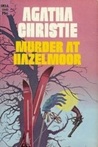
The Murder at HazelmoorThe Murder at Hazelmoor by Agatha Christie
My rating: 1 of 5 stars

Years ago I read several novels by Agatha Christie, and I did not like them too much, regardless of whether they featured Miss Marple, Hercule Poirot, or were non-series. Not only did they not have, in my view, any literary merits, but also I could not learn from them anything new about people or the world. True, they provided a relatively painless, perhaps even pleasant way of spending time, but with so many better books around this was wasted time. Curious about my current, foggy-brained geezer reaction to Ms. Christie's prose I decided to read her standalone "Murder at Hazelmoor" (the British title is "The Sittaford Mystery"). Alas, the best thing I can say about the novel is that it reads very fast - there is virtually nothing there to focus on.

The location is a tiny village on the fringes of Dartmoor in Devonshire, and the time is about 1930. A group of people are participating in a table-turning séance in Captain Trevelyan's house. The spirits tell them that the owner of the house, who temporarily lives elsewhere, is dead. Inspector Narracott of the Exeter police handles the case, but there is also a parallel investigation led by young and energetic Emily, who has a personal stake in the case.

All characters are paper thin; these are not real people. The dialogues sound artificial, even when one takes into account that the book was written about 85 years ago. A substantial portion of the novel is dedicated to clumsy manufacturing of holes in alibis of various characters. The writing is pedestrian and occasionally quite awkward (e.g., "Adroitly, unperceived by the other, Emily managed to discard her gloves [...]") There are two little things, though, that I liked about the novel: a mention of a "charabanc" (I had to resort to Google search), and the fact that the fictitious village of Sittaford would be only about 20 miles or so from the town of Liskeard, near which I spent few weeks 43 years ago.

One and a half stars.


View all my reviews

Sunday, March 8, 2015

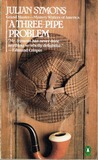
A Three-Pipe Problem (Sheridan Haynes, #1)A Three-Pipe Problem by Julian Symons
My rating: 2 of 5 stars

Sherlock Holmes solves the "Karate Killings" case in Julian Symons' "A Three-Pipe Problem". Well, not exactly. Mr. Symons does not bring to life the famous character from Sir Arthur Conan Doyle novels. The Sherlock Holmes who is the protagonist of the story is really Sheridan Haynes, an actor who plays the legendary detective in a popular series on British TV. The "recursive" concept is quite neat - not only do we have a fictional character playing another fictional character, but we also have two levels of fictitiousness, the direct fiction of Mr. Haynes emulating Mr. Holmes in real life as well as the "second-degree" fiction of the former imitating the latter in a TV show.

Three men are murdered - a nondescript marketing statistician, a well-known Member of Parliament, and a minor criminal - all killed by karate chops. The police, whose investigation is headed by Chief Superintendent Roger Devenish, are trying to find some commonality between the victims, while Mr. Sheridan, that is Sherlock Holmes in the eyes of most viewers, undertakes a private investigation, helped by London traffic wardens.

Contrary to what the blurb on the cover says, this is not Mr. Symons' best work. Still, this has been an extremely fast - two hours or so - and not unpleasant read, and I do not regret spending the time. It made me ponder, for the hundredth or thousandth time, one of the most puzzling facets of human behavior: why do people tend to identify actors with the characters they play?

Two and a half stars.


View all my reviews

Friday, March 6, 2015

Death Notes (Inspector Wexford, #11)Death Notes by Ruth Rendell
My rating: 3 of 5 stars

What a coincidence! Having finished Julian Symons' "The Belting Inheritance", I picked Ruth Rendell's "Death Notes", and the similarities between the two novels are striking. Both are based on the motif of an impostor attempting to get inheritance, both have a part of the plot happening in France, and both exhibit what I call a triple-D, a Deeply Disappointing Denouement. Well, maybe it is just double-D with Ms. Rendell's book, without the "Deeply". Maybe.

Sir Manuel Camargue, an elderly, world-famous English flute player, drowns in a pond, shortly before his planned wedding to a very young woman. The inquest determines that the drowning has been an accident. However, Sir Manuel's estranged daughter, after 19 years of silence, contacted him a few weeks before the drowning, and Chief Inspector Wexford, who has family connections to the ex-bride-to-be, has doubts about the coincidences and about legitimacy of the purported daughter, and commences a private investigation.

Although Ms. Rendell's writing is a little bit less fun than Mr. Symons', it is quite competent and reader-friendly, and the beginning chapter is superbly crafted. The thread about Mr. Haq's restaurant and his ostensibly African dishes is hilarious. I also quite like the fragment where Inspector Wexford visits various places on the California Coast. No wonder - I have now lived more than half of my life there.

Two and three quarter stars.


View all my reviews

Tuesday, March 3, 2015

The Belting InheritanceThe Belting Inheritance by Julian Symons
My rating: 2 of 5 stars

Julian Symons' "The Belting Inheritance", after a very promising start, gradually fizzles to standard, boring mystery fare. At least it gives me a chance to write a short review - always a good thing.

The narrator, Christopher, loses both parents at the age of 12. Lady Wainwright, his great-aunt, invites him to stay at her grand Belting residence, where he lives during his school years. Having finished the studies at Oxford, Christopher returns to Belting. Lady Wainwright is dying of cancer, and one of her sons, presumed killed during World War II, comes back to claim his part of inheritance. His brothers are sure he is an impostor and there is a lot of trouble at Belting, including murder.

I love Mr. Symons' truly captivating and plausible setup for the mystery, his use of Spoonerisms ("strippling ream", etc.), and his puns. The chemistry between Christopher and Uncle Miles is shown with great skill as are the dreamlike passages describing the narrator indulging in pastis in Taverne Maximilien Robespierre in Paris. Alas, the further we go, the more boring and contrived the plot becomes, and it has been quite an effort to finish reading the novel, amidst ridiculous twists of the story.

Two and a half stars.


View all my reviews