Saturday, August 15, 2015

Love in AmsterdamLove in Amsterdam by Nicolas Freeling
My rating: 4 of 5 stars

"I don't want it particularly accurate; my whole idea was to write about Europe in a European idiom. Something that has a European flavor and inflection."

"Love in Amsterdam" (1962), Nicolas Freeling's very first novel, was retitled "Death in Amsterdam" in the U.S.; how's "Death sells better than love" for a snide remark? The fragment quoted above is uttered by Martin, the novel's protagonist, a Dutch writer of sorts, but it aptly describes Freeling's own writing. His entire opus, all about Europe, all with distinctly European flavor and inflection, has been written in a European idiom.

Martin's ex-lover, Elsa von Charmoy, is shot and he is the obvious suspect, since on the night of the murder he was seen close to the place where Elsa lived. Yet inspector Van der Valk does not quite believe that Martin is guilty, and works hard to find other suspects. His clever scheming leads to a lively finale, a bit too lively for my taste.

The novel is divided into three parts: while the first and the third are captivating psychological procedurals (with the third offering a glimpse of the Dutch judicial system, quite different from the British one), the middle part is a vivid portrayal of Elsa and almost a clinical study of Martin's infatuation with her. "[Elsa] blossomed on dramas and scenes, loved upheavals, denouncements, tremendous rages, weeping reconciliations." I feel as if I have known her forever. Had I been in literary criticism instead of applied mathematics, I would have written a paper entitled "Portrayals of Women in Nicolas Freeling's Books". Maybe when I retire...

This is Van der Valk's first appearance in one of the most famous detective series in the history of the genre. Critics often compare Freeling's work to Simenon's. True, the psychological depth and the authentic European flavor are similar in both authors' works, yet I much, much prefer Mr. Freeling for his inimitable prose, rich, convoluted, and multilingual, full of quirky digressions and virtuoso passages depicting streams of consciousness. Already in this first novel we are offered a spellbinding account of Martin's galloping thoughts, while he is in the grip of neurosis, afraid of losing his sanity.

"The man paced up and down the cell.": With this sentence, the literary career of the most erudite, literate, and idiosyncratic author of psychological crime novels began in 1962, the career that ended 40 years later, with his memoir The Village Book and the final mystery, "The Janeites".

While not a masterpiece like other Van der Valk's novels A Long Silence and particularly Gun Before Butter , "Love in Amsterdam" is a wonderful psychological drama, and a very good mystery

Four stars.


View all my reviews

Thursday, August 13, 2015

The GetawayThe Getaway by Jim Thompson
My rating: 2 of 5 stars

"Flight is many things."

One remembers the 1972 Hollywood movie with Steve McQueen and Ali MacGraw (the horrid 1994 remake is hardly worth mentioning). Sam Peckinpah's direction, tense plot, and the violent extended gunfight scene made the film into a classic that nowadays seems to be enjoying a renaissance of popularity. The film is based on Jim Thompson's "The Getaway" (1958), yet it would be hard to find a book and a movie based on it, which - except for some common elements of the plot - would be more different.

Coolheaded, intelligent, and likeable criminal, Doc McCoy, is the mastermind of a bank robbery. While the Doc and his crew flawlessly pull off the elaborate heist, not all aspects of the getaway plan work as expected and the Doc's and his wife's flight with the loot to their promised safe haven in Mexico is filled with horrors.

To me the best thing in the book is that it gives a totally unexpected answer to the question "Will Doc and his wife manage to escape justice?" The answer, neither "yes" nor "no", transcends this simplistic question. While literary and somewhat allegorical the denouement is very pleasing for its surprise factor.

Other than the ending, I have to commend the well-constructed plot. The writing is economical yet notably dated: I am currently reading a novel written only four years later, which sounds contemporary, while Mr. Thompson's prose feels like it came from the 1930s. Also, only McCoy's character is drawn with any depth: all other protagonists are pure paper. The portrayal of women in the novel may be considered demeaning. The high violence content - the novel depicts numerous killings - is to be expected and feels natural.

Two and a half stars


View all my reviews

Wednesday, August 12, 2015

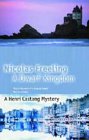
A Dwarf KingdomA Dwarf Kingdom by Nicolas Freeling
My rating: 3 of 5 stars


"Partir c'est mourir un peu." (To say goodbye is to die a little).

Nicolas Freeling quotes this French saying in "A Dwarf Kingdom" (1996), the sixteenth and last novel in the Castang series. Also, bidding farewell to the Commissaire and his wife in a moving Epilogue, he writes "I am sorry to say goodbye. Two good friends are here, and across the last twenty-five years." Well, a little part of my life is over too with the end of the series.

Commissaire Castang and Vera are visiting their friends' place when the party falls victims to brutal robbery that leads to murder. The trauma causes Castang to retire from his EU job, which is warmly received by his superiors as he has never been one to toe the political line. He moves to Biarritz to be close to his ex-boss, Commissaire Richard. Alas Richard is gravely ill and he soon dies leaving Vera his house, which establishes the setup for the plot that involves Castang's entire family, kidnapping, terrorists, and ends in a climactic shootout.

It is amazing how differently the author depicts the two scenes bracketing the plot - the initial robbery and the final shootout between the police and the terrorists. While the first scene is highly dramatic, believable, and deeply disturbing, the other one is so by-the-numbers and so Hollywood-style that it feels as if it were automatically produced by some bestselling-thriller-generating software. I keep wondering whether the author did it on purpose, and what that purpose might be.

Of course, as usual with Freeling, the plot is much less important than his quirky prose through which he portrays Europe and Europeans at the very end of the 20th century. I also enjoy the usual profusion of digressions, tangential remarks, and word plays in various languages, such as the quote "One cannot have a child and a gun" (how true, by the way!) or the supremely funny Jacques Derrida jibe: "Der ain't no readah. Der ain't no writah, eidah." The amusing passage about how French bad taste is different from German one is precious, albeit too long to quote.

What about the title? Freeling says through one of his characters "We've what you call the dwarfs and they have the place by the balls and make money out of everything." And later "[...] dwarfs are much too smart ever to make anything. Even if you happen to acquire something-made, then you have to spend a lot on publicity persuading imbeciles that they need to go and buy it. Money is the only real commodity." Dwarfs combine international business with municipal politics, and have support in the highest and holiest places, like the government and Opus Dei. We all live in their kingdom as pawns in their game. This is a deeply cynical book, overwhelmingly sad and mature; it is quite clear that life has thoroughly cured the 69-year old author of illusions.

My project of reading all 16 books in the series, mostly in order, has been a great adventure It does not bother me at all that I still do not know Castang and what to expect of him (I know Vera better, particularly after quite a drastic scene in this book). I am saying goodbye to them with a very heavy heart.

My rating reflects this one novel alone; the whole series, a literary phenomenon, is one of the best achievements in the history of serious mystery genre.

Three stars.


View all my reviews

Sunday, August 9, 2015

The World According to Mike LeighThe World According to Mike Leigh by Michael Coveney
My rating: 4 of 5 stars


“Real people aren’t.”

I find this aphorism – coined by famous British film director Mike Leigh - the most important sentence in his biography written by Michael Coveney’s. Mr. Leigh, who is mostly known for utterly realistic portrayals of people in his movies, makes the point that to obtain absolute authenticity in a film, one has to thoughtfully, meticulously, and artfully create it. A so-called real person (a non-actor), put in front of a camera, has little chances of projecting cinematic authenticity; nothing is further from reality than "reality shows". In a movie one needs an ensemble of talented, hard-working actors to succeed in conveying truth about people, their behavior, and their interrelationships. And that’s exactly what Mr. Leigh has been doing for almost 50 years in his films and various theatrical and radio productions.

“The World According to Mike Leigh” is an early (1996) biography of the director; at the time of writing most of his best-known films had not yet been made, yet the author does an outstanding job of explaining what sets Mr. Leigh apart from other great movie directors. “Secrets and Lies”, “Happy-Go-Lucky” and "Life Is Sweet" are among the very best films I have ever watched. Hence, while this is supposed to be a review of the biography, I will instead try to convey a few points that the author makes about the director's art, thus morphing the review into "Why I Love Mike Leigh's Movies" manifesto.

Three aspects of Mr. Leigh's work seem to be the most important. First, all his movies and plays are about ordinary events in ordinary lives of ordinary people. There are no star wars, no monsters, no hobbits, no witches, no zombies, no superheroes in his fims; there is nothing there that one would not encounter in their everyday life. As the director says himself, he puts on the screen “real adventure of living and surviving from day to day, and from year to year”, and his films are "about the essence of what it is to be alive”. Timothy Spall, an actor often appearing in Mr. Leigh's movies, provides a memorable phrase: “His area is the glory of everyday nothingness which he elevates to great drama.”

Second, in his movies Mr. Leigh does not attempt to convey any messages: social, cultural, philosophical or otherwise; he says that he is not "a social proselytizer". Instead, he is interested in truth about people and wants to show how they behave, rather than how they should behave or what the viewers should think about their behavior. For instance, in "Secrets and Lies" - to me one of the greatest movies ever made, winner of 1996 Palme d'Or in Cannes - we meet a black daughter of a white mother. In most other directors' hands the film could become just a vehicle carrying messages about racial issues or veer into cheap sentimentality. Nothing like that here - the film offers real human drama and real human joy.

Finally, the actors. The author writes that Mr. Leigh "does not work with stars. He tends, rather to help create them." He works differently than all other directors. Before the movie is made, he does not know the story in any detail, and there is no scenario. Here's what Mr. Coveney writes about the director's method: “He will work one-on-one, initially, with each actor, developing a character […] Each actor […] will not be apprised of any knowledge of the other characters beyond what he or she would know of them as that character at that particular point of the story. The story will be developed chronologically. The characters will meet each other only in situations of Leigh's devising […]”

As good as Mr. Coveney's work is - and here I am unable to avoid comparisons with the utterly horrid biography of Diana Rigg that I have recently suffered through - it is not perfect: the accumulation of minute details about virtually every single work of Mr. Leigh overwhelms the reader. I would love to learn more about how Mr. Leigh's method affects his actors when they work with "conventional" directors. I also find Mr. Coveney's logic suspect in the fragment when he argues about certain cinematic aspects of the pivotal mother-daughter scene in "Secrets and Lies". Hence, I can rate this otherwise wonderful biography with only

Four stars.


View all my reviews
Tuesday, July 28, 2015

The Seacoast of BohemiaThe Seacoast of Bohemia by Nicolas Freeling
My rating: 2 of 5 stars

Travelling through the mountainous heart of Idaho and exploring its scenic wonders is not conducive to writing a book review, especially when the book just read is rather a big disappointment. Here’s then just a token review of Nicolas Freeling’s “The Seacoast of Bohemia”, the fifteenth and penultimate novel in the Henri Castang series.

Commissaire Castang, a high-level bureaucrat in the European Community, is contacted by a woman whose son has been missing for four years. She has just received a phone call from the child and knowing that Castang used to be a police officer she asks him to find her son. Since the woman’s father was an SS captain during the war, Castang realizes that the keys to the abduction lie in the past. The case leads him and his wife Vera to Germany and the Czech Republic. Castang soon discovers connections with some criminal activities on the Czech border, and it is actually Vera who is instrumental in solving the case. The theatrical finale takes place in Denmark.

The plot is rather feeble, not always plausible, and the denouement, slow in presentation, leaves a lot to be desired. Of course the writing is accomplished, but Freeling’s inimitably erudite and quirky prose is mostly absent. One virtuoso passage, which beautifully explains what marriage is about, certainly the best thing in the novel, does not save the book. To me, “The Seacoast” is the weakest of the almost 30 Freeling’s books that I have read so far.

Two stars.


View all my reviews

Saturday, July 25, 2015

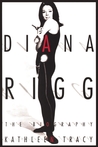
Diana Rigg: The BiographyDiana Rigg: The Biography by Kathleen Tracy
My rating: 1 of 5 stars

Having just recently read "Blind In One Ear", a memoir of Patrick Macnee, who played the inimitable Mr. Steed in the 1960s British cult series The Avengers (see review
here), I could not resist picking the biography of Ms. Diana Rigg, who played the unforgettable Emma Peel in that series. It is ironic that Ms. Rigg, a great British stage actress, who have won numerous acting awards for her performances in Medea (Tony Award), Rebecca (Emmy Award), Abelard and Heloise (Critics Award), Mother Courage and Who's Afraid of Virginia Woolf?, and others, who was named a Dame Commander of the British Empire for her stage career, is mostly known for a role in a TV series. On the other hand, it is not a surprise that the series in which both leads were played by real actors rather than TV hacks is widely considered one of the best cult series in the history of television.

Alas, while Mr. Macnee's memoir – thanks to the author’s perhaps unexpected literary gifts and his great sense of humor - is a pleasure to read, Ms. Rigg's biography, authored by Kathleen Tracy, is barely readable; in fact, it is likely the worst biography I have ever read. Ms. Tracy's method is to quote long passages from hundreds of interviews with Ms. Rigg and with people who have known her, and to use her own words only to interpret the quotes and provide segues from one quote to another. Even worse, the bio is full of pages and pages of completely irrelevant asides. For instance, why do we need to read minute details of Mr. Lazenby’s career, why do we need to know what he did before acting in a movie with Ms. Rigg and after? Why would we want to read about Ms. Blackman's and Ms. Shepherd's careers?

It is a pity that the author limits herself to a mechanical, cut-and-paste approach in this biography, instead of examining in depth such fascinating issues as, for example, Ms. Rigg’s relationship with feminism: while the character of Mrs. Peel is both pre-feminist (these are the 1960s) and post-feminist (as she takes feminism for granted), Ms. Rigg strongly denies any feminist bent of her own. I would also love to read more about what Ms. Rigg herself thinks about her various stage performances – the mechanical listing of titles, critics’ blurbs, and awards does not make for an interesting biography.

One and a half stars.


View all my reviews

Wednesday, July 22, 2015

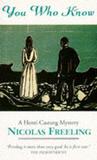
You Who KnowYou Who Know by Nicolas Freeling
My rating: 4 of 5 stars

"Voi che sapete che cosa ė amor" is the title of Cherubino's aria from Mozart's "Le Nozze di Figaro". You who know what love is. Nicolas Freeling's titles - as quirky as they are - make perfect sense. "You Who Know" (1994) is a surprise - almost a regular thriller! And it is a good one plus we get the usual great, unmistakably Freelingesque, idiosyncratic writing. We even have a stream-of-consciousness fragment (transpiring on a Deutsche Autobahn, of all places). It is the fourteenth novel in the series featuring Henri Castang, a high-ranking French police commissaire, now serving as a Brussels bureaucrat.

Castang's friend, an Irish diplomat also employed by the European Community, has been shot and the commissaire is sent on an unofficial mission to cast light on the killing and - which is obvious but cleverly left unsaid - to make sure no political undercurrents can be found. Castang and his wife, Vera, travel to make inquiries in Ireland, in England, and in Lugano area, in the Swiss - Italian Alps. I am not one to appreciate plot a lot, but here we have a Whole Lotta Plot.

The Grand Finale is spoken rather than acted, so mercifully there are no silly final action scenes! Instead we have an Aristotelian catharsis - "a certain emotional cleansing of the spectator". Great job (particularly if one does not like formulaic, paint-by-numbers thrillers)!

Four stars.


View all my reviews