Saturday, January 31, 2015

Too Many Cooks (Nero Wolfe, #5)Too Many Cooks by Rex Stout
My rating: 3 of 5 stars

Rex Stout's "Too Many Cooks" is my fourth recent reread of a book in the Nero Wolfe series about the fat genius of detection and his extremely able and worldly assistant, Archie Goodwin. When I first read this book, about 45 years ago, I was very impressed. Not really so now, but the reread has been worthwhile for reasons different than the plot.

Mr. Wolfe almost never leaves his house, yet we find him and Archie on a train traveling to Kanawha Spa, W.Va., for the meeting of Les Quinze Maitres, Fifteen Masters (of culinary arts). A murder occurs during the festivities, a murder that has been predicted by several characters in the novel, and Mr. Wolfe, quite reluctantly, has to solve it. The plot is competent, nothing more than that.

The action takes place in 1937 (Mr. Stout published the book in 1938), and what is absolutely revealing is the portrayal of how black people - the cooks, waiters, kitchen helpers - were treated in the Southern state of West Virginia at that time. They were, universally, considered not equal to white people. By today's standards, the language is particularly offensive, and I do not believe the book could be published now, at least without a series of disclaimers, even if it just presents the realities of naked racism of the times (I find today's racism exactly as deep as in those times, yet it is more refined and thus harder to see).

Three stars.


View all my reviews

Thursday, January 29, 2015

The Selling of Supreme Court NomineesThe Selling of Supreme Court Nominees by John Anthony Maltese
My rating: 3 of 5 stars

I have always been fascinated by the workings and power of the Supreme Court in U.S. and have read quite a number of books on the topic. John Anthony Maltese's "The Selling of Supreme Court Nominees", even if a bit unfocused, is a pretty good book that helps understand the nomination and confirmation process of candidates to this highest court.

As the author says, the President's power to nominate judges to the Supreme Court is "the least considered aspect of the Presidential power". To me, it is one of the most important aspect since Supreme Court can decide which human behaviors are legal. The author's words are, of course, more precise and detailed: "By defining privacy rights, interpreting the First Amendment, setting guidelines for the treatment of criminal defendants, and exercising its power of judicial review in a host of other areas, the Supreme Court establishes public policy."

Mr. Maltese points out that some of main issues tackled by the Supreme Court have not changed since the year 1800. Already then there was a debate on "states' rights versus national supremacy", which can be, in a sense equivalently, called a debate between a narrow or a broad interpretation of the Constitution. The author also shows that although most of public battles about nominations to the Supreme Court that involved organized interest groups have happened in the recent 50 years (for example, the famous Bork hearings, which managed to pitch 300 anti-Bork interest groups vs. 100 pro-Bork groups, or the Clarence Thomas / Anita Hill case), the rise of public interest influence can be traced to the 1880s.

The author offers what the title promises in the second part of the book, where he writes about how the Presidents (through their people, of course) "sell" their candidates for judicial appointments. Mr. Maltese quotes the wonderfully succinct phrase "Presidential power is the power to persuade", and shows a variety of ways in which this persuasion takes place in the case of the Supreme Court nominations: using the press, the Senate, employing patronage and politics (sometimes even using veiled threats to opponents), and through building interest group support.

Quite an interesting book that offers much more than I have summarized above.

Three and a half stars.


View all my reviews

Monday, January 26, 2015

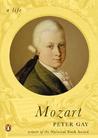
Mozart: A LifeMozart: A Life by Peter Gay
My rating: 4 of 5 stars

Years and years ago, I read Alfred Einstein's biography of Mozart. It must have been some time in the early 1970s as it was then that I began listening to classical music (and serious jazz) in addition to my usual rock, punk, and "alternative" diet. By the phrase "I read Einstein's biography", I mean skimming through it; my knowledge of music theory is nil and I probably did not understand 95% of terms the author was using. So I am happy that I have found Peter Gay's short biography "Mozart" (1999) that focuses on the composer's life, and deliberately avoids musicological jargon. The author, born in 1923, is a famous German-American historian. He writes very well, and "Mozart" is a pleasure to read.

The book chronicles Mozart's life and music from his first attempts at the harpsichord at the age of three, through the triumphant European tour with his father and sister (the tour began when he was seven and ended when he was 10), composing an opera at 14, which was so successful that the prima donna had to repeat an aria at the premiere in Milan, to his mature years and the peaks of his creativity: the late symphonies, piano concertos, string quartets, and phenomenal operas - "Don Giovanni" and others.

The first sentence of the book is magnificently crafted: "The life of Mozart is the triumph of genius over precociousness." Millions of kids are precocious at three, thousands at 10, but there are only a handful of geniuses in the history of music. The main focus of the biography is the constant conflict between Mozart and his father, Leopold, himself quite a gifted musician. The young Mozart is aware of his own incredible talent and wants to do anything possible to develop it, while Leopold just wants his son to make money. In fact, the biography makes it clear that Mozart the son was also quite interested in money, but was rightly thinking long term, while the father was only able to see the short-term gains. Great thanks to Wolfgang Amadé (Mozart's preferred middle name) for not following his father's advice! Leopold's death ends the conflict, but Mozart has frequent bouts of depression caused by not having reconciled with his father.

This short book portrays Mozart as a full-bodied human being, not just a giggling overgrown child, as he is shown in the movie "Amadeus". The author also dispels several myths that have been common for over 200 years: the myth of Requiem as being composed for Mozart's own death, of Salieri as the archenemy, and of Mozart having been poisoned.

I am happy that the author spends some time writing about Sinfonia Concertante K. 364, which is one of my favorite works by Mozart. I wish he also mentioned Adagio & Fugue K. 546 and Mass in C minor, K. 427. Anyway, I am putting some other books by Peter Gay, on the Enlightenment, Freud, and Nazi Germany, in my reading queue.

Four stars.


View all my reviews

Saturday, January 24, 2015

No More Dying ThenNo More Dying Then by Ruth Rendell
My rating: 3 of 5 stars

I have just finished reading "No More Dying Then" by Ruth Rendell. It was only after an Internet search that I have found out that I had read another book of hers, "From Doon With Death", which I even review here, on Goodreads. Through that search I have learned that Ms. Rendell suffered a stroke just about 20 days ago. I hope her health will improve.

The novel has not made a strong impression on me. It is written well, the plot is quite complex and relatively interesting, and the denouement is unexpected and clever, yet I am unable to find anything memorable in the book (similarly to the other book, which I have completely forgotten in one year). To me, it is just a standard psychological crime novel, perhaps a little above the average. I have very recently rated Karin Fossum's "Black Seconds" with five stars. Both novels concern very similar topic - disappearances of children - yet I find Ms. Fossum's work about two levels of excellence higher. Maybe it shows just how ignorant I am about the crime genre. After all, Ms. Rendell is an extremely successful writer of crime novels and mysteries, and she has received incredible number of awards from critics and readers (she has also written as Barbara Vine).

A five-year-old boy disappears in a town in Sussex and Chief Inspector Wexford leads the investigation. This brings back the memories of an event that happened about a year earlier - the disappearance of a 12-year-old girl, which still remains unexplained. The police seek connections between the two events. Inspector Burden, who seems to be the main character in the novel, is a part of the investigative team, but he does not help much because of his depression caused by the recent death of his wife, and other serious personal problems. So it is up to Wexford to solve the case.

I intended to rate the book with three stars, but the denouement is given in the form of Wexford's monologue, during which the Chief Inspector patiently explains to his friend, a doctor (Holmes and Watson come to mind), every single thing that has happened. To me, this is a trite and cliché way of ending a crime novel.

Two and three quarter stars.


View all my reviews

Thursday, January 22, 2015

The Master of KnotsThe Master of Knots by Massimo Carlotto
My rating: 2 of 5 stars

Massimo Carlotto's "The Master of Knots" is the fifth novel in the so-called Alligator series. I have not read the previous four books, and it is now even more unlikely that I will read them, maybe except the first. I do not like book series because of their repetitiveness.

The narrator, Marco, nicknamed "Alligator" because of the drink he favors, is an ex-convict who works as an unlicensed private detective. His two associates are ex-convicts too (in fact one is quite a hardened gangster) and their connections to the Italian crime world help Marco solve the cases. The story deals with the gruesome world of S & M and violent pornography. Marco's client hires him to find his missing wife, who has been kidnapped because of her work as an S & M model. Very soon it becomes clear that the client is not telling the truth. The plot involves a lot of brutality, and some passages related to violent pornography are quite graphic. I find the plot rather naive, and the character of the gangster who keeps killing people yet has a heart of gold is - to put it mildly - ridiculous.

The only valuable parts of the novel are the well-written fragments about extreme police brutality in handling the anti-G8-summit protests in Genoa in 2001. One of Marco's associates is an anti-globalization activist and he gets severely beaten by police during the protest, beaten to the extent that he barely survives. The author, Massimo Carlotto, was himself imprisoned for many years, for crimes he had not committed, so it is no wonder that for him the police are the worst kind of human scum, and the judicial system is totally crooked.

If not for the Genoa protests thread, this would be a one-star novel. The political activism issues elevate my rating to

Two stars.


View all my reviews

Tuesday, January 20, 2015

The Players and The Game (Joan Kahn-Harper, #4)The Players and The Game by Julian Symons
My rating: 2 of 5 stars

I have a lot of work these days and thus am not in a mood for serious literature. Julian Symons' "The Players and the Game" is an altogether forgettable British mystery with a twist: it features Count Dracula as well as Bonnie Parker, the one of "Bonnie and Clyde" fame. There is torture - cutting living bodies to ribbons, sucking blood, genital mutilation, and - worst of all - there are quotes ascribed to Friedrich Wilhelm Nietzsche.

The first third of the novel is the set-up. There are too many characters, and I have found it impossible to keep track who is who, even though I make notes as I read. The social life of middle-class characters in a small British town, close to London, is shown realistically, but the passages are frankly boring.

The rest of the novel resembles a police procedural. When reading mysteries or crime novels I am usually not interested in "who did it". If you are into this kind of thing, though, I have to warn you that I guessed correctly about 25% into the novel. The book is well written, but ultimately not that interesting, and the Nietzsche quotes are nauseating (but then I suffer from a severe case of nietzschephobia).

Two stars.


View all my reviews

Sunday, January 18, 2015

Being Mortal: Medicine and What Matters in the EndBeing Mortal: Medicine and What Matters in the End by Atul Gawande
My rating: 4 of 5 stars

The title of Atul Gawande's book "Being Mortal" is a bit misleading. I expected that Dr. Gawande, whose book "Better" I rate very highly, will help me in the struggle with the concept of my own mortality. After all, I am 63. Yet the main topic of the book is something altogether different - Dr. Gawande writes about how we shouldn't and how we should care for the aged, the very sick, and the dying. He also writes about the gross unpreparedness of today's medicine and today's doctors to handle the process of dying. The society at large is totally not prepared either; the author writes "This is the consequence of a society that faces the final phase of the human life cycle by trying not to think about it."

Roughly a half of the book is about everything that is wrong about how we care for elderly people who are in their last stages of life, but not yet dying. Dr. Gawande writes about the horrors of nursing homes. So-called "assisted living facilities" are a much better concept yet the most sacred principle governing this country - greed - has managed to largely destroy or at least obstruct the idea.

The second half of the book is about how the doctors and other medical professionals should handle the process of their patients' dying. Dr. Gawande writes: "Medical professionals concentrate on repair of health, not sustenance of the soul. Yet - and this is a painful paradox - we [here, he means the society] have decided that they should be the ones who largely define how we live in our final days."

This is by far the deepest and the most interesting part of "Being Mortal". Dr. Gawande demonstrates that the medical profession's priorities are wrong. He writes "We think our [medical professionals'] job is to ensure health and survival. But really it is larger than that. It is to enable well-being. And well-being is about the reasons one wishes to be alive." The doctors should realize that the dying may have other priorities than just suffer horribly a few weeks longer. The author writes: "[...] our most cruel failure in how we treat the sick and the aged is the failure to recognize that they have priorities beyond merely being safe and living longer; that the chance to shape one's [life] story is essential to sustaining meaning in life [...]

Dr. Gawande raises many, many more important topics. He writes about hospices and makes a convincing argument that dying at a home-based hospice is better for people than dying in an ICU. He emphasizes palliative care. I am deeply impressed by the author's repeated references to Leo Tolstoy's novella "The Death of Ivan Ilyich" (one of the best books I have read in my life). "Being Mortal" is a provocative book (thanks for that!), full of wisdom about things that we do not really want to (but should) think about.

Four and a quarter stars.


View all my reviews