Tuesday, August 12, 2014

The SuspectThe Suspect by Laurali R. Wright
My rating: 3 of 5 stars

L.R. Wright's "The Suspect" won the prestigious Edgar Award for "The Best Novel" of 1986. It is quite a good book, with a captivating plot, thus the latter part of this review explains why my rating is much less than stellar.

78-year-old George Wilcox kills 85-year-old Carlyle Burke, whom he has known for many, many years. The killing is described on the first few pages. The rest of the novel reaches deep into the past to reveal the reasons for the killing. "The Suspect" is a very good police procedural, or rather a "Royal Canadian Mounted Police procedural", as the events take place on Canada's Sunshine Coast. We learn how Staff Sergeant Alberg and his officers gradually get closer and closer to the solution of the case. The denouement is logical and mercifully lacks silly plot twists.

The novel is extremely readable; the term unputdownable fits really well. Thanks to my insomnia, I have been able to read it in one sitting. Yet "The Suspect" is all about the plot, while I love to read books for the writing. When I read "serious" books by, say, Coetzee, Pynchon, Joyce, etc., I read them for the magical "Wow!" sentences and passages that reveal deep wisdom or the beauty of the art of writing. But even in the "mystery genre" works by great authors such as Nicolas Freeling, Denise Mina, Hakan Nesser, Karin Fossum, and many others have depth and incredibly skilled writing in addition to the engrossing plot. I prefer books that I have to read slowly, books in which I enjoy rereading sentences and passages many times to appreciate the author's literary talent or wisdom. Reading books fast because they are interesting is not exactly my thing.

Moreover, there are too many coincidences and connections between people in "The Suspect", too many goings-on in a soap opera style. The romantic thread is well written, but a bit too sweet for my taste. Another complaint: how can a good writer - which Ms. Wright undoubtedly is - concoct the following monstrosity of a sentence: "His body had become a horrified, garrulous commentator on calamity", and - to make things worse - put it in the very first page of the novel? To me, it is a worthy contestant for the Worst Sentence of the Year Award.

Obviously I am very far from qualified to be an Edgar Award judge, but I checked their database and out of the 61 books awarded the best novel distinction since 1954 I read 13 and I would rate six of them with five stars. Definitely not this one, though.

Three and a quarter stars.


View all my reviews

Sunday, August 10, 2014

Death And The Chaste Apprentice (Charlie Peace, #1)Death And The Chaste Apprentice by Robert Barnard
My rating: 2 of 5 stars

Having read several "serious" books in a row I think I have earned the right to some light entertainment. Here's yet another novel by Robert Barnard, "Death and the Chaste Apprentice" (1989), my eleventh work of his.

An annual music and theatre festival is held in Ketterick, a London suburb. The plot begins when the rehearsals for an Elizabethan play "The Chaste Apprentice of Bowe" and for subsequent opera performances begin at the Ketterick Arts Festival. The first 40 pages are really difficult to get through as there are too many characters, which makes the text hard to focus on. I almost never quit books before I finish them, but I have been tempted in this case. About one-third into the novel, there is a murder. The local superintendent Iain Dundy, helped by Charlie Peace from the Metropolitan CID, are on the case.

To me, the best parts of the novel are fascinating insights into the world of opera and Elizabethan theatre. Alas, one can find precious little of Mr. Barnard's trademark snide writing style, and there are very few sarcastic passages that have impressed me so much in several of his other novels. I burst out laughing only in three or four places. While the plot is serviceable, there is one twist too many at the end. No, it is not a bad book; it is just below the average for Mr. Barnard.

Two stars.


View all my reviews

Wednesday, August 6, 2014

The Next 25 Years: The New Supreme Court and What it Means for AmericansThe Next 25 Years: The New Supreme Court and What it Means for Americans by Martin Garbus
My rating: 4 of 5 stars

Everybody who cares about the future of the United States of America should read Martin Garbus' book "The Next 25 Years: The New Supreme Court and what it means for Americans" (2007). My chances of being around in 2032 are not good, but I am worrying about my daughter and granddaughter. While the actions of the President of the United States and of the Congress have only short-term effects, the Supreme Court decisions have a long-lasting impact; they affect generations. The Supreme Court decisions define our country.

Mr. Garbus is a famous First Amendment lawyer and a pre-eminent legal historian. His book is unabashedly and virulently anti-conservative. Thus a disclaimer is needed: I am much more of a liberal than a conservative, even if I always attempt to look at issues from various points of view, so my review may be biased by my beliefs.

The book was published in 2007. Justices David Souter and John Paul Stevens were still on the court while Sonia Sotomayor and Elena Kagan were yet to be seated. In the book Mr. Garbus makes a convincing case for several theses of which I, as a complete layman, select the following five that have captured my interest the most:
(1) The Rehnquist Court followed by the Roberts Court have been engaged in massive rewriting of the US law established in the 1937-1980 period.
(2) The Court (Rehnquist's and Roberts'), with its conservative majority, has allowed a major increase of the executive branch's power at the expense of the legislative branch, the Congress. Mr. Garbus writes "the Court is now determined to impose its own political preferences over that of elected federal officials."
(3) The Court has allowed the United States to be "defined only by the vision of the majorities". Mr. Garbus rightly says that "majority rule and democracy are not the same thing".
(4) "The five votes today [...] are based more on political power and less on legal reasoning", which - to me - violates the separation of powers principle.
(5) The notion of Justice Kennedy and ex-Justice O'Connor being "swing votes" is a myth; both have always been solidly conservative votes.

Mr. Garbus' book is rich in brilliant observations. I have written down more than twenty "deep thoughts", but for sake of brevity will quote just one here: "As one federal court said 'Of the three fundamental principles which underlie government: [...] the protection of life, liberty, and property, the chief of these is property'"

This is a really scary book. For once, I agree with one of the blurbs on the cover that warns us about "how the [...] bench may imperil our way of life and endanger the liberties you may have thought were our inalienable rights."

The most famous preamble might now as well say "We the rich people..." The poor need not apply for constitutional protection.

Four and a half stars.


View all my reviews

Saturday, August 2, 2014

No One Writes to the Colonel and Other StoriesNo One Writes to the Colonel and Other Stories by Gabriel Garcí­a Márquez
My rating: 4 of 5 stars

Gabriel Garcia Marquez' masterpiece "One Hundred Years of Solitude" is one of my most favorite books. His "No One Writes to the Colonel and Other Stories" is certainly not of the same caliber, although - to me - one of the stories is a gem that redeems the whole collection.

The plot of the title novella takes place during troubled times in Colombia - the 1950's La Violencia that claimed lives of more than 100,000 people. The novella presents a grim and extremely sad story about an elderly couple: the colonel has been waiting for over 15 years for the pension that is due to him because of his participation in the Thousand Days' War almost 60 years ago (1899 - 1902). The colonel and his asthmatic wife have no means of support except for a very promising rooster that they plan to sell when the cockfighting time arrives. Colombia is under martial law and curfews. The bells in the tower ring out the censor's movie moral classification and most movies are "unfit for everyone". It is a captivating story, yet I find the ending cheap and trivializing.

There are several other stories in the collection, and the last one, "Big Mama's Funeral", is totally charming - one of the best short stories that I have ever read. Subtle wit, humor, generous doses of magical realism transcend the skillful storytelling and raise the story to a high level of literary art. "At dusk the resonant pealing of St. Peter's Basilica mingled with the cracked tinklings of Macondo. Inside his stifling tent across the tangled reeds and the silent bogs which marked the boundary between the Roman Empire and the ranches of Big Mama, the Supreme Pontiff heard the uproar of the monkeys agitated all night long by the passing of the crowds."

Three and three quarter stars.


View all my reviews

Saturday, July 26, 2014

Snow White and Russian RedSnow White and Russian Red by Dorota Masłowska
My rating: 5 of 5 stars

For years my wife has been telling me about this young (born in 1983) Polish writer, Dorota Maslowska, and about her book "Snow White and Russian Red" (2002) (the original Polish title sounds much better: "Wojna polsko-ruska pod flaga bialo-czerwona", which roughly means "A Polish-Russian war, under the white and red flag"). I have been reluctant to read it; after all what can one expect from a nineteen year old author? While it is obvious that at nineteen one can be a great mathematician, poet, chess player, and the like, it seems impossible to write a great novel at that age. At nineteen one can have the knowledge of structures, but not the structure of knowledge, which takes years and years of living to emerge. For example, I myself at nineteen was a total idiot (like almost all of my friends and acquaintances, boys much more than girls, sorry for the sexist stereotyping); of course I knew about music, games, sports, films, TV, etc., but I knew nothing about the matters that count, I knew nothing about life.

Now that I have read the book (in English translation, because someone has borrowed the Polish original from us and never bothered to return it), I am totally blown away by it. There is much depth in the novel, and the writing is utterly magnificent. The entire ending is a literary tour de force; it is poetic, hypnotic, brilliant. Like, wow, man.

The novel, which some critics rightly compare to "Catcher in the Rye", "Trainspotting", "Naked Lunch", is about gray, depressing, small-town life of young people, the author's contemporaries, in the times of systemic change in Poland, from the so-called Communism to free-market economy. The narrator is a young man, called Nails (Silny, in the Polish original), who has just been dumped by his girlfriend. Nails and everybody else in the novel are constantly on speed. They live from day to day, without any aim, in a country where, as they say, there is no future. They look up to the West and down on the "Russkies".

When I was 19, life was so much easier. We knew who the bad guys were: the government, the press, radio, and TV. They were always lying to us, the good Polish people. In 2002 Poland things are not so easy; it is hard to know who the bad people are. Nails claims to be a leftist-anarchist, but he really does not know what it means and is mainly interested in satisfying the needs of this one special part of his body.

"Snow White and Russian Red" is a biting satire on xenophobia and fake patriotism: "Either you are a Pole or you're not a Pole. Either you are Polish or you're Russki. And to put it more bluntly, either you're a person or you're a prick." Patriotism is measured by respect of the flag.

It is a very funny novel as well. I burst out laughing about every other page. The translation by Benjamin Paloff is totally wonderful. I will soon read the original and amend this review, if need be, but I cannot believe the original Polish version could be any better. The quarter of a star that I am taking off is for the author's failed device (in my opinion) of putting herself, "Dorota Masloska", in the final parts of the book.

Here's a passage that reminds me of some of the great works in world literature; it could have been written by William Faulkner or James Joyce, but it was written by 19-year-old Dorota Maslowska, barely out of high school in Wejherowo, Poland:

"Indeed, we're girls talking about death, swinging a leg, eating nuts, though there's no talk of those who are absent. They're scarcely bruises and scratches that we did to ourselves, riding on a bike, but they look like floodwaters on our legs, like purple seas, and we're talking fiercely about death. And we imagine our funeral, at which we're present, we stand there with flowers, eavesdrop on the conversations, and cry more than everybody, we keep our moms at hand, we throw earth at the empty casket, because that way death doesn't really concern us, we are different, we'll die some other day or won't die at all. We're dead serious, we smoke cigarettes, taking drags in such a way that an echo resounds in the whole house, and we flick the ash into an empty watercolor box."

Four and three quarter stars (five stars for the translation).


View all my reviews

Wednesday, July 23, 2014

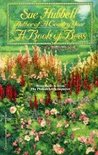
A Book of Bees...and How to Keep ThemA Book of Bees...and How to Keep Them by Sue Hubbell
My rating: 4 of 5 stars

My favorite animal is Apis mellifera and among many, many things in the world that make me sad, very few make me sadder than the danger to the survival of bees. World agriculture may suffer because of decreased pollination, people may have to miss out on honey, and this wonderful and fascinating species may face a risk of near extinction. I have a personal regret as well: over 12 years ago, when my wife and I bought a house with a large garden, we had thousands of bees, living in an ad-hoc hive in the walls of our pool shack, buzzing sweetly all around, working on flowers, and pollinating our avocado tree. Even two or three years ago, we still had some bees and my dream of getting a few beehives to work with when I retire was still alive. Now all bees are gone from our garden. What's worse, bee colonies are disappearing all over the world at much faster pace than in the past because of the so-called Colony Collapse Disorder, probably caused by new-generation pesticides.

I have just read a wonderful book about bees and beekeeping, Sue Hubbell's "A Book of Bees" (1988), one of the many books I had bought because of my retirement apiculture plans. In the 1980s Ms. Hubbell was a commercial beekeeper, with an annual yield of about 6,000 pounds of honey from 300 hives. She clearly knows what she is writing about, despite her protestations "The only time I ever believed that I knew all there was to know about beekeeping was the first year I was keeping them. Every year since I've known less and less and have accepted the humbling truth that bees know more about making honey than I do". (The realization that it takes a lot of learning to know how little we know is, of course, true for most professionals.) In addition to all the stuff about beekeeping, Ms. Hubbell writes about plants and various creatures of the Ozarks, where she had her honey business. Her writing is beautiful: leisurely, assured, quiet, yet engaging. She even quotes large fragments of Virgil's poem about bees that had been written over 2000 years ago.

Of all earth's creatures, bees feature some of the most fascinating social behaviors. I have read several books about bees, including research monographs, so I have some rudimentary understanding of the theory of the subject. Ms. Hubbell provides so many details of the practice. From her book I have learned about joining colonies, uniting hives, preventing swarming, dealing with "supersedure" (which happens when bees themselves "requeen" the colony), and many other topics. Let me quote one humbling tidbit: to make one pound of honey a single bee would have to fly 76 thousand miles (three times around the Earth). I have also learned that, contrary to popular perception, bees spend a lot of time doing nothing at all, which makes me love them even more. Clever creatures!

My fascination with bees probably began in 1962 or 1963, when I read the well-known 1901 book "The Life of the Bee" by Maurice Maeterlinck. I hope that fifty years from now bees will still be around, pollinating flowers, making honey, and making my grand-grand-grandchildren happy.

Four stars.


View all my reviews

Sunday, July 20, 2014

Death And The Princess (Perry Trethowan, #2)Death And The Princess by Robert Barnard
My rating: 2 of 5 stars

Robert Barnard's "Death and the Princess", my tenth book of this author, is quite unremarkable. I will make up for it by writing a remarkably short review, compared to my usual overlong and tedious writings. I keep reading Barnard because I love his sardonic writing style, occasional snide remarks, frequent use of high-quality humor, and the fun he has with the English language. Nice examples of all of these qualities can be found in the novel, yet this time I find the plot quite weak.

Princess Helena is a distant cousin of the British royal family. There are indications that she might be in harm's way, and Superintendent Perry Trethowan is chosen to be her personal bodyguard because of his "couthness". When people with whom the Princess has had connections begin to die, the plot gets quite complicated.

The denouement is surprising, but it is revealed during a conversation between the detective and his sidekick - so very cliché. Some funny bits about royal lifestyles and about Mrs. Thatcher are high points of the novel.

Two and a quarter stars.


View all my reviews