Sunday, February 21, 2016

A Sun for the DyingA Sun for the Dying by Izzo Jean-Claude Curtis Howard
My rating: 3 of 5 stars

"That night, Rico decided to leave Paris. If he was going to die, he might as well die in the sun."

I did not have an easy time reading Jean-Claude Izzo's A Sun for the Dying (1999). More than a half of the novel is written in an annoyingly didactic style, with the tone alternating between preachy and slightly patronizing. At the end of each short chapter I was almost expecting to see questions - for book club readers - about what the author wanted to convey in the chapter. Fortunately, I persisted in reading on and the last third of the novel unexpectedly hit me with real literary artistry: memorable scenes, touching themes, and some beautiful prose. And while excessive sentimentality and mushiness dominate the ending of the book, at least the author seems to be treating the reader as a grown-up.

Rico - in the past a successful salesman, a member of financially secure middle class, owner of an expensive home, happy husband of a beautiful woman and a proud father - has gradually lost everything he had and loved. Whatever calamity was possible to happen did happen to him - yes, partly because of wrong choices he made, but mainly because of adversity of fortune - and he found himself at the very bottom of society. He is now homeless in Paris, lives on the street, begs for money, suffers from a serious lung disease and is an alcoholic. When his best friend freezes to death sleeping in the metro station, Rico decides to move to Marseilles, the city of eternal sun, the city where he really loved for the first time and where he spent some of the best days of his life with the beautiful and loving Léa.

Rico reminisces about the life he once had and the women he once loved. His travel south is a quest to recapture the lost past, the past full of happiness and promise. He makes new friends on the road, and even meets a woman who becomes - totally unexpectedly - maybe the truest love of his life. (By the way, the tender love scene devoid of any sexual overtones, is to me the best passage in the novel.) The author turns out quite skillful in manipulating the reader's emotions because even this reviewer, a disillusioned and diehard cynic, had tears in his eyes.

Two and three quarter stars.


View all my reviews

Wednesday, February 17, 2016

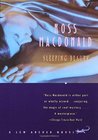
Sleeping BeautySleeping Beauty by Ross Macdonald
My rating: 3 of 5 stars

"An offshore oil platform stood up out of its windward end like the metal handle of the dagger that has stabbed the world and made it spill back blood."

Sleeping Beauty, Ross Macdonald's penultimate Lew Archer novel, was published in 1973. I remember finding it one of the best entries in the series when I read all books by Mr. Millar (Ross Macdonald's real name) between 30 and 40 years ago. So I feel a bit disappointed that I have not enjoyed the book as much now as I had in the past, even if I still find it well written and hard to put down and even if I think that the very beginning of the novel is outstanding, perhaps not quite in the class of The Underground Man , but still unforgettable. Also, on a personal note, I had first read Sleeping Beauty in late 1970s, when living in Poland, and I could not imagine that about five years later I will take strolls on the same beaches that provide location for the major events in the story.

Lew Archer is returning home from Mazatlán and when the plane is flying low over the region of Pacific Point (a fictional town that is thought to represents La Jolla or Newport Beach) he catches a glimpse of oil spill. Instead of going home he drives to Pacific Point and watches oil workers struggling to contain the spill. On the beach he encounters a young woman, Laurel, who is trying to save a grebe fouled with oil. She asks him to drive her to Los Angeles and Archer learns that she is the granddaughter of the man whose well is spilling the oil. They stop at his apartment and Laurel steals a bottle of Nembutal sleeping pills from Archer's medicine cabinet. She then disappears and Archer, driven by guilt, manages to get hired by Tom, Laurel's husband, to search for her. Archer gets to know the entire oil-rich Lennox family, and learns a lot about dramatic events from their past. He also becomes an unwilling participant in grim current happenings caused by shadows of the past.

This is quintessential Macdonald. The events that occur in the early 1970s are driven by repercussions of what happened quarter of century earlier. People cannot escape the consequences of their past and the long-buried secrets and lies are resurrected to cast their horrific shadows. Children and grandchildren suffer because of sins committed by their parents and grandparents. Greed is the driving force of human actions: murder is justifiable since "Dad's estate is hanging in the balance." Although I share the author's bitter and cynical outlook on the causes of human suffering, I am unable to fully appreciate the novel. Maybe because the plot is way too complicated and its details and twists virtually impossible to follow? Or maybe because of too many convenient coincidences that help drive the plot?

All in all, I think it is mainly the oil spill theme that saves Sleeping Beauty from being an unremarkable novel for this great author. Mr. Millar's environmental awareness, not that common in the early 1970s, shines through.

Three and a quarter stars.


View all my reviews

Sunday, February 14, 2016

City of Glass (The New York Trilogy, #1)City of Glass by Paul Auster
My rating: 3 of 5 stars

"This Auster was the first intelligent person he had spoken to in a long time."

Paul Auster's City of Glass (1985) is the first part of his New York Trilogy. I have not yet decided whether I want to read the next installments: while I have found this short novel very readable and extremely clever, it is also quite "empty", in the sense of being not much more than a sort of formal exercise in postmodernist metafiction. I think self-referentiality is great fun, but only when used in moderation. The novel reminds me of a snake that eats its own tail and Mr. Auster goes as far with his metafiction as the snake that manages to swallow all of itself, so that nothing remains.

The protagonist of the story is one Daniel Quinn, a writer, who publishes mystery novels under the pseudonym of William Wilson. The narrator of the stories - written by Quinn under the guise of Wilson - is Max Work, a clever and resourceful private eye and Quinn's favorite character. One night Quinn receives a phone call, and the caller - apparently attempting to call Paul Auster, a famous private detective - wants to secure his help with a difficult case. Despite the obvious case of mistaken identity, Quinn takes the case; after all, he - in a sense - is Max Work and he knows the private-eye business. Quinn's/Auster's task is to protect the client, Peter Stillman, who had been severely harmed in childhood by his father, a professor who used his son for warped psychological and linguistic experiments. The father had been found insane and committed to an institution, but now he is being released and Stillman's wife is afraid that he might harm Peter again.

To me, the main problem of City of Glass is that it wants to be all kinds of great things at the same time, and in attempting to achieve this it does not play any of the roles convincingly enough. Mr. Auster might have undertaken too ambitious a task: combining an interesting mystery with a philosophical discourse on the fluidity of borders between human identities - for instance, what makes me who I am rather than someone else - and between the reality and fiction - the so-called reality may in fact be indistinguishable from a fictional layers in a story. Another major component of the novel is an intertextual thread: the author refers to other literary works, particularly to Cervantes' Don Quixote and works of Edgar Allan Poe. While all this is fantastically interesting, there is just too much of a good thing. Also, on a pure literary storytelling level, I actively dislike the moment when, toward the end of the novel, the author - or, more precisely, whoever we might consider the author - offers a generous helping of clues along with explanations, for instance, the "D.Q." initials. I much prefer when clues speak for themselves.

On the other hand, I truly love one moment in the story. Avoiding spoilers, I will only say that it involves the trajectories of the "mad professor's" walks in the New York City. The passage makes one seriously consider the suspicion shared by some philosophers of science that one can detect any arbitrary pattern in a completely random process, provided that one studies the process infinitely long, and from infinitely many points of view. The references to the Tower of Babel metaphor - ubiquitous in the story - and particularly the concept of dissonance between the language and the reality it describes, are fascinating; but again, why does one need to touch on so many theories of everything in a short novel?

Three stars.


View all my reviews

Thursday, February 11, 2016

The Wycherly WomanThe Wycherly Woman by Ross Macdonald
My rating: 3 of 5 stars

"If there was a God, He worked in mysterious ways. Like people."

In my current "Reread Ross Macdonald" project I have read the very good The Underground Man published in 1971 and the not so good The Way Some People Die , which dates back to 1951, thus I have been eager to refamiliarize myself with the 1961 Macdonald's work, The Wycherly Woman. Well, while my rating is much closer to the lower of the previous two, at least the novel manages to escape the two-star ignominy.

Lew Archer is hired by Homer Wycherly, a rich businessman from California Central Valley, to find his missing 21-year-old daughter, Phoebe, who is a college student. In his search Archer is not supposed to contact Mr. Wycherly's ex-wife whom the client describes as an evil person bringing harm to anybody she comes in contact with. After talking to people who knew Phoebe in her college town Archer follows the missing woman's trail to Sacramento and Bay Area. The plot gets really complicated from then on and connections begin to emerge between Phoebe's disappearance, suspicious real-estate transactions, and blackmail. Archer finds a dead body of a severely beaten man. He also finds "the Wycherly woman" and - despite the promise given to his client - talks to her in a memorable hotel bar conversation. Eventually things escalate to further murders, and Archer has quite a handful of suspects.

Despite excessive complexities of the plot and some exasperatingly overlong passages - for instance, the conversation Archer overhears with the use of microphone attached to the sliding glass door - the plot sort of makes sense. The confession of the presumed multiple killer towards the end of the story - a cliché element of crime novels that I dislike so much - is forgivable here because we do not really know who the killer is. Macdonald is successful in conveying the message that nothing is really as we think it is, and that the same words, sentences, and whole stories may carry completely different meaning, depending on the context, and on the amount of the listener's knowledge. Also, I like the skill with which the author imbues the first part of the novel with the sense of mystery surrounding that Wycherly woman. I love the reference to "The Vision of Mirza". The ending is powerful.

Not my favorite book by the author, and not his best prose, despite some great passages including the beautiful first three paragraphs of the novel, which depict California Central Valley of the early 1960s. But the novel is certainly worth reading; were it written by someone else than Kenneth Millar (Ross Macdonald's real name), it would probably be considered a towering achievement.

Two and three quarter stars.


View all my reviews
Monday, February 8, 2016

The Way Some People DieThe Way Some People Die by Ross Macdonald
My rating: 2 of 5 stars

"She lived in a world where people did this or that because they were good or evil. In my world people acted because they had to."

Which is true in my world too.

Ross Macdonald's The Way Some People Die was published in June 1951, which means it is exactly my age, well, I was born one month later. Having read it for the first time over 30 years ago I had to reread it to satisfy my curiosity: does it feel as old as I do? The answer is clearly "No": the book is not much dated, perhaps except for nuances of wording and phrasing in the dialogues, prices (nowadays it would be hard to find a hotel room with a bath for $1.50), and the mention of a spittoon, a gadget that may seem a bit alien to the generally non-smoking Twitter Generation. The important things, like people's motives and behavior have not changed in the slightest in the last 65 years, nor has the drug traffic through Mexico-USA border diminished.

Lew Archer is hired by a Mrs. Lawrence to find her daughter, Galatea (Galley), who has disappeared. Galley, a young woman working as a nurse, was last seen over two months earlier with a sinister looking man, according to a witness. The case takes Archer to Palm Springs, Pacific Point - a fictional city modeled on La Jolla - and San Francisco. More people appear to be missing, several people die, and the drug traffic from Mexico plays the main role in the story.

I do not much like the overly complicated plot: I have never really gotten interested in it. Although sparse and economical the prose does not yet seem to be as stellar as in some later books, for instance in The Underground Man , which I recently reread and where even the plot is better constructed. The Way seems average and unremarkable, and that special feeling of reading something extraordinary is absent, except for the magnificent sentence shown in the epigraph - one of my favorite quotes by Ross Macdonald (Kenneth Millar in his private life).

Two and a half stars.


View all my reviews

Friday, February 5, 2016

The Finger's TwistThe Finger's Twist by Lee Lamothe
My rating: 4 of 5 stars

"[...] watching [police chief and mayor] and the rest of them, or guys like them, operate. The operators. Watching them fuck up everything they touch, everything they couldn't steal for themselves."

Here's my own attempt at an aphorism that might fit here: "Money soils everything and everybody it touches. " Lee Lamothe's The Finger's Twist (2009) would just be a simple thriller, a plain entertainment read, if not for the author's skill in conveying his passion about the particular kind of human scum: politicians and public officials for whom government service is the way of enriching themselves without the slightest concern about anyone or anything else. They are convinced that it is their sacred right to take public money because they are in positions of power. The best of them believe they will stop stealing some day, when they will have amassed enough; most of them never stop taking, though.

Charlie Tate and Elodie Gray are a rather unlikely couple. Charlie, a writer and journalist, hails from humble roots: his father was a "rag-and-bones man", who lived off collecting and selling stuff other people had discarded. Elodie, who comes from a rich and powerful family, is a paraplegic confined to a wheelchair. Although I do not quite "buy" them as a couple, the story of their first meeting is wonderfully memorable. They live in Toronto during the early 2000s massive anti-globalization protests and work as unlicensed investigators, doing research for lawyers, due diligence for mergers and acquisitions, and the like. They occasionally do some "dark side jobs", where Charlie's muscle - he also is an experienced bodyguard - counts more than the brain. I love the description of one of their business activities: "A perimeter sweep is a fancy name for stealing garbage." They look for proofs of illicit activity in the garbage thrown away by their targets; the insufficiently shredded documents are put back together by "jigsaw people". Cool!

The first part of this literary, well-written thriller serves as a setup: it tells the story of Charlie and Elodie helping defend a young woman, Corolla, who belongs to Elodie's rich family circles and who has been accused of attempting to detonate a bomb in the provincial legislature building during the anti-globalization riots. In the much better second part, which happens some time later, Elodie and Charlie need to demonstrate the innocence of his 23-year-old twin daughters, who are accused of planning terrorist actions.

I do not remember any popular book that would present the horrors of corruption in a big city government and the police force with such force and skill. All honest public officials and police officers are either eliminated or marginalized to allow the top human pigs - the mayor, the police chief, their lawyers - gorge at the trough of public money. (Apologies to pigs for the comparison.) Although fictional, the story of Pia Filipina is heartbreaking.

I do not like everything in the novel. The saintly honesty of Charlie and Elodie, their ability to avoid being soiled by money, is not totally plausible. The ending of the Cornelius Fox thread is a "huh?? moment". Yet, I have no doubt that The Finger's Twist is an outstanding novel in the thriller genre.

Four stars.


View all my reviews

Tuesday, February 2, 2016

Blood of the AngelsBlood of the Angels by Eugenio Fuentes
My rating: 3 of 5 stars

"[...] if something couldn't be solved with thoughts and words, then it couldn't be solved with a gun."

Eugenio Fuentes' Blood of the Angels (2001) is a good read: a solid, quiet, slow-moving psychological crime novel. It features mostly believable characters with rather plausible motives, and occasionally offers neat pearls of wisdom like the sentence quoted above. I quite like the book, for several reasons: first, while it is indeed a crime novel, the crime is not in the forefront of the plot: it just serves as a sort of background for a readable book about people; I got quite interested in learning more about them.

Further, even if - as I understand - the novel is an entry in Mr. Fuentes' series that features private investigator Ricardo Cupido, he is by no means the main character in the plot: the reader spends much more time with other characters. In general, I do not like series novels because of their maddening repetitiveness about the main character: if I have to read the twenty-third novel featuring Kinsey Millhone, or the thirtieth one with Alex Delaware, I would like these novels to focus completely on other characters and omit the same old same old Millhone/Delaware stuff. So - unless another book in the series proves me wrong - I will continue reading Ricardo Cupido stories because I hope they are not really about him at all.

Julián Monasterio's wife left him, his mother has just died, and his six-year-old daughter whom he raises alone seems to be unable to cope with the adversity. Among the objects that Julián's mother left is a pistol that once belonged to his father. Instead of taking it to the police or hammering it to render it useless, Julián leaves it in his bank safe, which he forgets to lock securely. It is not difficult to guess that the stolen gun is used to cause another human tragedy. The murder happens in a school and the teachers and staff are under police investigation. Julián hires Mr. Cupido to find the gun and the murderer.

Although a good read, the novel is hardly a great one. Some characterizations are close to caricatures; also, I have been bothered by a feel of unsophisticated innocence permeating the text: for instance, it is hard to believe that a middle-aged educated man would be so naive as to be surprised that people change, that they become different people over time, and that he would ask "[...] how was it possible for such unspoken hostility to come about between a man and a woman who fifteen years ago had loved and desired and admired each other [...]". Other readers may find the naiveté charming and sweet, so I recommend the book with minor reservations.

Three stars.


View all my reviews