Tuesday, March 31, 2015

Peace on EarthPeace on Earth by Stanisław Lem
My rating: 3 of 5 stars

I grew up on Stanisław Lem. Most people know him as a science-fiction writer, but he was a philosopher, futurologist, social and literary critic first, and a sci-fi author second. I do not want to repeat what I wrote about Lem here , when reviewing his very good book (four stars was my rating) "The Chain of Chance" (the Polish title is "Katar"). "Peace on Earth" (1987) is not quite on the same level, but still, it is a greatly enjoyable and thought-provoking read. It could technically be categorized as a science-fiction adventure novel, but to an equal degree it is an essay on human nature and the future of our species. Ijon Tichy, hero of many Lem's books, and one of my favorite literary characters, returns here.

The story happens in not so distant future - the Earth has been totally demilitarized and disarmed, and the arms race has been moved to the Moon, where it is pursued by so-called planet machines, basically robots controlled by self-optimizing software, that are evolving to become more and more deadly. But soon the Lunar Agency that supervised the whole setup loses track of what is happening on the Moon; several reconnaissance missions fail, and it is up to Ijon Tichy to save the Earth from the danger of being annihilated. Mr. Tichy manages to sort of complete his mission and return from the Moon, not empty-handed, but in the process he gets callotomized (his corpus callosum, a bundle of neural fibers that joins the two hemispheres of the brain, is severed), and there are really two of him, not quite in harmony with each other.

The plot could serve as a script for a successful, meaning juvenile and silly, sci-fi movie, with heavily armed robots, badder and badder killing machines, fighting each other in spectacular scenes of destruction. Yet the silly plot is just a vehicle to showcase interesting futurological ideas and to portray usual stupidity of the human race. During the reconnaissance Tichy uses so-called "remotes", which are sort of androids that perform the physical activities (fighting, killing, even dying) allowing the controlling human to remotely "participate" in these activities. There are many more intriguing ideas: computer chips replaced by self-organizing microbes, "synsects" (synthetic insects) taking the role of soldiers, large-scale combatants replaced with swarms consisting of millions of cooperating micro-particles, etc.

As usual in Tichy novels, there is a lot of first-rate humor. "Sadistics" is a new branch of game theory that deals with games that end fatally for everyone. The sudden need to urinate on the Moon brings Tichy a lot of trouble. To me, the funniest is the mention of Probacteria Party, whose members claim that "microbes have as much right to live as we", so we need to refrain from killing them. I laughed out loud, but then came the realization that the emergence of such a political party is not that unlikely these days.

Three and a half stars.


View all my reviews

Sunday, March 29, 2015

Zappa: A BiographyZappa: A Biography by Barry Miles
My rating: 5 of 5 stars

Frank Zappa is the musical idol of my youth. I listened to Zappa's album "Freak Out!" almost 50 years ago, in 1966 or 1967, fascinated by what I considered the avant-garde freshness of the music, political references, and great sense of humor. Obviously, being a teenager, I dearly loved the scatological and obscene references. Later, when I tried to grow up, came my fascination with Mr. Zappa's strong stance for freedom of speech and against consumerism. As far as music is concerned I was very much into Mr. Zappa's guitar playing, and "Hot Rats" and "Shut Up n' Play Yer Guitar" were some of my most revered albums. Zappa's death in 1993 came as a big loss in my life. Zappa had been my hero, someone to look up to politically and musically.

I read (or tried to read) several books about my hero. Zappa's autobiography - "The Real Frank Zappa Book" - made me adore my idol even more. I did not particularly like the unfocused "The Frank Zappa Companion", and could not very much get into "Frank Zappa: the Negative Dialectics of Poodle Play, full of technical details about the music, and sounding too much like a research paper on the conceptual continuity of Zappa's work for my taste. I have just now finished "Zappa" by Barry Miles. It is a great biography, a serious, extremely well researched book that - in my view - does a fantastic job of showing the real Frank Zappa - a musical giant, yet a real person, full of insecurities and obsessions. A genius yet also somewhat of a jerk.

The major strength of Mr. Miles' biography is that it transcends the biographical details, the enumeration of albums, songs, and performances, and the trite gossip. The author proposes several theses about forces that drove Frank Zappa in his art and in life and provides convincing arguments for these theses. Perhaps the most important of them is that the experience that shaped the artist the most was the ten days he had to spend in San Bernardino County Jail for making an ostensibly pornographic tape, whereas in reality he was entrapped by a zealous policeman. "By the time he got out, he no longer believed anything the authorities had ever told him. Everything he had been taught at school about the American Way of Life was a lie." Ever from then on he would try to make America "see itself as it really was: phoney, mendacious, shallow and ugly."

Zappa often claimed he did not want to become what he is known to most people as - a rock musician. He famously confessed "I never had any intention of writing rock music. I always wanted to compose more serious music and have it performed in concert halls." His becoming one of the most famous rock artists was a vehicle that allowed him achieve his ultimate goal - having various symphony orchestras play his "serious" compositions. The guise also allowed Zappa to achieve the other major goal of his life - becoming a pre-eminent social critic. Songs like Brown Shoes Don't Make It express "consummate indictment of government corruption and the vacuous sterility of American consumer society." In I'm the Slime Zappa "describes television content as vile and pernicious, brain-washing the American public until they are a country of zombies who do as they are told: eat the processed junk food that is advertized, and think what the government wants them to think, all dished up as mind-numbing sit-coms, soap operas and game shows." Well, it is hard not to totally agree with this assessment.

Mr. Miles' diagnosis is most acute when he emphasizes Zappa's "ambivalent relationship to the counter-culture". While living in the absolute center of this counter-culture, he despised most of what it stood for. Zappa usually had very little respect for his fans and often he even vilified his audiences. He treated many people whose money he took for performing for them like complete idiots (and rightly so). The famous "Gee, my hair's getting good in the back!" quote satirizes the audiences' preoccupation with looking like the band members they idolized. The adolescent boys screamed in delight when they listened to Zappa's famous Titties and Beer, which was, basically, a song about how stupid they were.

I am for complete freedom of speech in arts and do not mind if an artist wants to write songs with lyrics about defecation, urination, flatulence, feet odor, nasal excretions, and other such things. People who are disgusted by the subject matter should just refrain from listening to these songs. And yes, I am disgusted with some Zappa's lyrics - I think 'Jazz Discharge Party Hats' might be the grossest song ever - yet I still support his right to write such a song, while at the same time doubting whether he ever managed to grow up.

What Mr. Miles' book made quite clear to me is how tyrannical and callous Frank Zappa was with respect to the musicians who played for him. Despite the fact that they had to work extremely hard - no other bands in the history of rock had to practice that hard during insanely prolonged rehearsals - and that Mr. Zappa paid them little, he continuously berated them and fired at will. His patronizing remarks about the members of the London Symphony Orchestra, who played his compositions and applauded his skills as a composer, are a particularly acute example.

Mr. Miles puts forward several other interesting theses in his book, for instance, about the influence of Zappa's Sicilian patriarchal roots, the consequences of his father's constant job changes and consequent relocations of Zappa's family, his lack of friends, even his apparent inability to love, yet this review is already way overlong. To sum up (finally!): Frank Zappa is a great musician and a keen social observer. He is the author of perhaps my favorite epigram "Scientists claim that hydrogen is the basic building block of the universe because it is so plentiful. I say there is more stupidity than hydrogen, and that is the basic building block of the universe." Yet, there is also another side to the genius and while I still admire Frank Zappa, I would somehow feel embarrassed, having read this great biography, to call him my hero.

Four and three quarter stars.


View all my reviews

Saturday, March 28, 2015

The Weeping Girl (Inspector Van Veeteren, #8)The Weeping Girl by Håkan Nesser
My rating: 3 of 5 stars

I am unable to understand - probably because of my fuzzy geezer brain - why people would want to read a 500-page book if its contents could be easily packed in 200 pages. Absolute majority of crime novels are about 400-500 pages long, and only selected few of them need that much volume. I figure the length of a crime novel must be dictated by business reasons rather than by the author or by complexity of the plot and thus a typical crime novel is heavily padded to reach what I believe is the contractual volume. Correct me if I am wrong, but I guess the reason for wanting fat books is that readers who pay, say, twenty-something dollars for a newly published book, need to "get their money back", right? Still, it remains a mystery to me why people would want to waste their time on reading the padding in a novel, the silly filler stuff, the irrelevant fluff. Also, just imagine the massive waste of paper.

To me, authors who use 470 pages for a story that could be well presented on 200-250 pages, commit a major sin. They steal my time, and time is the only thing that I am sure to never get back. I generally refuse to read crime novels that are significantly longer than about 200 pages, and prefer to read ones that are shorter than 200 pages. I would never pick "The Weeping Girl" by Håkan Nesser if not for the fact that he has been one of my favorite authors of crime novels (I even rated one of his books with five stars, a rating reserved solely for masterpieces of the genre). I am still angry at the author for forcing me to read 470 pages, whereas the plot, the characterizations, and even the psychological and sociological observations could easily fit in half that volume. The rating reflects my anger. I like the plot, I like the writing, I totally love one fragment of the novel, but - on principle - I cannot rate the book high. OK, now that I vented my anger, a few words about the novel.

The plot alternates between 1983 and 1999. Winnie Maas dies in July 1983, "because she changed her mind." It is a pretty good first sentence, one that the reader can appreciate at the end. In July 1999 Detective Inspector Eva Moreno is sent to a small town of Lejnice to interview a criminal who is incarcerated there. She meets a girl on the train (the title "weeping girl") who tells her a curious story. Inspector Moreno gets interested and the connections between the current time and the events of 1983 slowly unfold.

Contrary to the blurb on the cover, it is not an Inspector van Veeteren novel. For me, it is better as I dislike series, but other readers may feel cheated. I mean the retired detective shows up at one point, but it is just a token appearance, a fragment of the padding in the novel.

I absolutely love the short fragment of the novel where two kids take advantage of the fact that the world is round. Extremely funny! I was laughing hysterically when reading the passage. There is also a mention of a Trabant that would not start. 50 years ago I used to ride in a Trabant and, indeed, it frequently would not start.

Mr. Nesser's story again takes place in a fictitious country, somewhere in Northern Europe - the names are a mixture of German, Dutch, and Swedish, with a smidgen of Polish (Lejnice, Sorbinowo, Wielki, etc.)

There is so much I like about this book: the fictitious country, no van Veeteren, solid plot, interesting and life-like characters, funny fragments. Yet the novel is twice too long, so the rating is only

Three stars.


View all my reviews

Wednesday, March 25, 2015

The Progress Of A CrimeThe Progress Of A Crime by Julian Symons
My rating: 4 of 5 stars

Julian Symons' "The Progress of a Crime" is a winner of the prestigious Edgar Award for 1961, which places Mr. Symons in the illustrious company of authors such as Raymond Chandler, Nicolas Freeling, John le Carré, Maj Sjöwall and Per Wahlöö, who all received the award within a few years of 1961. It is indeed a very good novel - I found it very hard to stop reading very late at night or rather early in the morning. Not exactly because of the plot, but rather due to the unusual depth that transcends the mystery genre.

Hugh, a young journalist from a local newspaper in a medium-size city in England is sent to report on the bonfire in which the locals burn an effigy of a bad squire from the past on the Guy Fawkes night. During the event one of the locals is stabbed to death, apparently by members of a gang of youths who take revenge on him for throwing some of them out of a dance party two weeks earlier. Hugh witnesses the crime. While the police begin their investigation and arrest five young men, various journalists from London arrive to feast on the juicy story.

The interrogation scenes are pretty brutal, almost bordering on torture, as the police keep sweating the truth out of the young men. Two of them are committed for trial, and when it begins, the novel turns briefly into a courtroom drama. But the author is not really interested in what goes on in the courtroom; we instead witness machinations in the background, and the guilt or innocence are not even mentioned as they are irrelevant. A stereotypical courtroom drama, such as ones written by Mr. Grisham or Mr. Martini, usually culminates during the closing arguments. I love Mr. Symons' approach - he skips the closing phases of the trial entirely. Remember: guilt or innocence are irrelevant, and it is not important which side - prosecution or defense - wins. The only thing that counts is the "story" that the press can sell to readers.

Rather than being just another pointless "whodunit", the novel is a powerful indictment of unethical practices in the world of journalism. A really good book, whose rating I could even round up to five stars if some characterizations, for instance that of Leslie's Dad's, were more convincing.

Four and a quarter stars.


View all my reviews

Sunday, March 22, 2015

The Water's EdgeThe Water's Edge by Karin Fossum
My rating: 3 of 5 stars

Norway's Karin Fossum is one of my absolutely favorite crime novelists, author of "Black Seconds", which I consider a masterpiece of the genre. "The Water's Edge" is the weakest of her six novels that I have reviewed here on Goodreads. To be clear, it is still a pretty good book, it just does not quite meet Ms. Fossum's stellar standards.

Kristina and Reinhardt, a married couple, out for a walk in the woods, find the body of a boy, sexually assaulted and murdered. Inspectors Sejer and Skarre arrive and an investigation commences. For the first half the novel alternates between three threads: the procedural following the police's attempts to find the killer, the dynamic of degenerating relationship between Kristina and Reinhardt, who is almost morbidly obsessed with the case and excited to be in the center of investigation, and the narration of the killer. A new thread is added midway through the novel - I have doubts about the structural soundness of the addition.

While the criminal plot is captivating and the characterizations are done well in this procedural, two conversations between principal characters ring false: Sejer's and Skarre's discussion of sexual crimes and then the dialogue between Kristina and Reinhardt about gender differences. Not that the topics are not plausible, it is mostly the way that the words in the conversations are written down that makes me wince. It is like reading the sentence "I possess this feature" instead of "I have it". Maybe it is the translator's fault.

Also, Ms. Fossum, usually a great master of understatement, is too verbose in the novel, almost as if she were writing a paper on crime psychology. On the other hand, I very much like the ending, which is in Ms. Fossum's best style - a bit enigmatic and open to the readers' interpretations.

Almost three stars.


View all my reviews

Friday, March 20, 2015

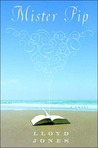
Mister PipMister Pip by Lloyd Jones
My rating: 4 of 5 stars

Lloyd Jones' novel "Mister Pip" comes extremely highly recommended by one of my favorite literary websites, Complete Review . Based on their A+ recommendation, I read three extraordinary books, Chris Wilson's "Mischief" , Amelie Nothomb's "Loving Sabotage" , and Cynthia Ozick's "The Puttermesser Papers" , each of which I rated with five stars. Well, Mr. Jones' novel breaks the pattern of my complete agreement with Complete Review. Despite their A+ rating, for me this is just a four stars novel, maybe even not that. In fact, I finished reading the novel about two weeks ago and since then I have not been able to decide what to think about it.

The story, narrated by Matilda, a thirteen year-old girl, takes place on Bougainville, an island in Papua New Guinea, "one of the most fertile places on earth", during the civil war of the early 1990s, a war that was largely ignored by the so-called "white world". We witness the horrors of war through the eyes of a child, and the slaughter of household animals, which allows the children to imagine "what a human being split open would look like", is a preview of further attractions to come. Mr. Watts, called Pop Eye by the children, the only white person on the island becomes an ad-hoc teacher after all actual teachers leave the island because of the war. Mr. Watts teaches the children by reading to them Charles Dickens' "Great Expectations". All the kids, and Matilda perhaps the most, are totally enchanted and captivated by the plot. "It contained a world that was whole and made sense, unlike ours", says she. Identifying herself with Dickens' Mr. Pip and living through his adventures becomes the most important thing for Matilda, temporarily even displacing her mother as the main authority and the guiding force in her life. Alas, the virtual existence of Mr. Pip does not end well for the children. The idyll ends when soldiers, human beings wielding machetes, teach other human beings a lesson by eviscerating them.

Mr. Wilkinson, a trained critic from "Financial Times" writes that the novel is a "brilliantly nuanced examination of the power of imagination, literature and reinvention as the themes of Dickens’s Great Expectations are woven into the story of Matilda’s loss of innocence." Well said, but to me, a largely illiterate applied mathematician, it is a book about the contrast between the carefree beauty and happiness of childhood, and real life where soldiers can come and slaughter people, cut them into little pieces and feed the shreds to pigs, while you are watching. By the way, while funerals are usually distressing events, I have never read a more disturbing funeral story than in Mr. Jones' novel.

I am probably wrong, but to me there is a flaw in the book's structure. The last three chapters, where the author sort of interprets the childhood events from a perspective of an adult, partially negate the raw beauty of the book full of magnificent passages such as, for instance, the list of "Things that tell you where home is." I still cannot decide whether it really is a four-star novel. Still, I strongly recommend it since it offers some great writing, unforgettable images, and sober insights into what humans can do to other humans.

Four stars.


View all my reviews
Maigret and the Black SheepMaigret and the Black Sheep by Georges Simenon
My rating: 3 of 5 stars

After rather disappointing "Maigret's War of Nerves" ( reviewed here ) and deeply moving "Maigret and the Spinster" ( here ), with its unforgettably sad character of Cécile, I have just finished reading "Maigret and the Black Sheep", an interesting and solid psychological crime novel, one of later entries in the famous series.

Chief Superintendent Maigret is woken at night to investigate the murder of a retired businessman, René Josselin. Mr. Josselin has been shot to death in his own apartment, while his wife was in a theatre with their daughter. Maigret's main problem is that the victim has been a universally liked man, with no enemies. Maigret eventually gets annoyed as people seem to constantly repeat that the Josselins were "decent sorts of people." The Chief Superintendent has some doubts and is not fully convinced that the grieving wife, the daughter and the son-in-law, a busy doctor dedicated to his patients, are telling the entire truth. Yet a breakthrough does not come for a very long time, until Torrence, one of Maigret's men, finds something interesting.

The denouement is logical and totally plausible. Many readers will probably call it disappointing as it is hinted at by the novel's title (the French title is much better - it translates to "Maigret and the Good People"), yet I quite like the obviousness of the ending (as I loathe the so-called "twists and turns"). Quite a readable novel! But I am done with Maigret, at least for the time being.

Three and a quarter stars.


View all my reviews